
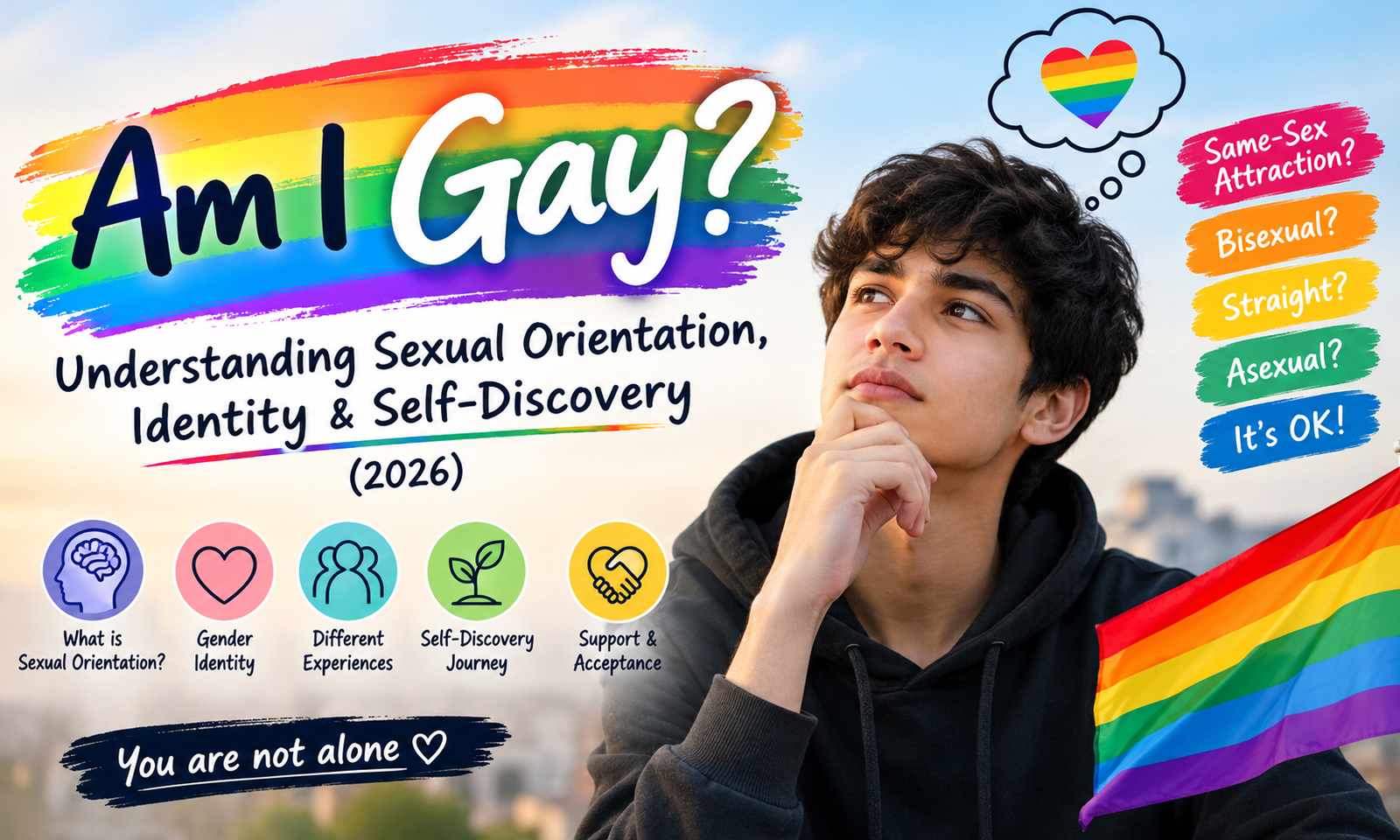

🌈 Introduction: Understanding “Am I Gay?”
Wondering “Am I gay?” is a common part of exploring your feelings, attractions, and identity. 💖
- Sexual orientation describes who you may feel romantically or sexually attracted to.
- Being gay, straight, bisexual, or questioning are different ways people describe their experiences.
- You do not need to rush to choose a label or define your identity.
- Online quizzes can encourage reflection, but they cannot determine your sexual orientation.
- Your feelings and experiences are personal, and there is no single correct way to understand them.
- Exploring your identity should happen at your own pace, without pressure from friends or society.
- It is perfectly okay to feel curious, uncertain, or confident about who you are.
- Learning about sexual orientation can help you understand yourself and others.
- Supportive friends and trusted people can make self-discovery feel more comfortable.
- Remember, only you can decide which identity label, if any, feels right for you. 🌈
1. 🌈 What Does “Am I Gay?” Really Mean?
The question “Am I gay?” often comes up when someone starts thinking about their attractions or emotional connections. Being gay generally means experiencing romantic or sexual attraction toward people of the same gender. However, everyone’s experience is unique. Asking questions about your identity does not automatically mean you are gay. Give yourself time to explore your feelings without judgment.
2. ❤️ Signs You May Be Exploring Your Sexual Orientation
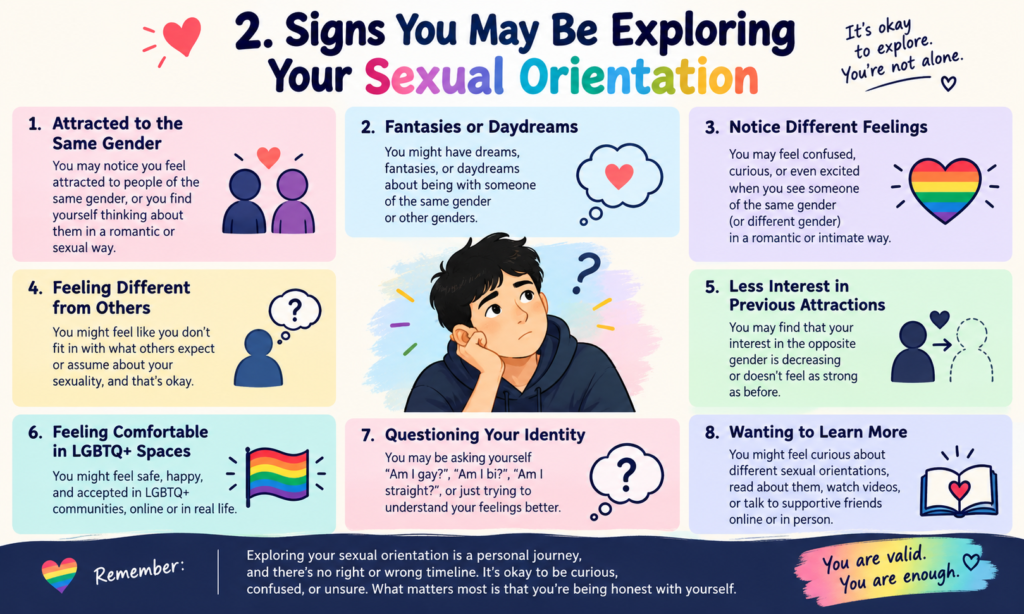
You might notice that you develop crushes on people of the same gender, imagine romantic relationships with them, or feel especially connected to LGBTQ+ stories. These experiences can help you reflect on your attractions, but no single sign proves a particular orientation. Feelings are personal, and understanding them may take time. You do not have to reach a conclusion immediately.
3. 🧠 Can an “Am I Gay?” Quiz Tell You Your Identity?
An Am I Gay quiz may provide questions that encourage you to think about your feelings, crushes, and relationship preferences. However, quiz results cannot accurately diagnose or determine your sexual orientation. Your answers may change as you learn more about yourself. Treat online quizzes as reflection tools rather than definitive tests, and remember that your identity is yours to define.
4. 🤝 Quizzes Are More Fun With Friends
Taking a quiz with trusted friends can create opportunities for interesting conversations about relationships, emotions, and identity. Choose friends who respect your privacy and avoid pressuring anyone to share personal information. Nobody should be forced to reveal their orientation or answer uncomfortable questions. A supportive friendship is built on trust, respect, kindness, and acceptance, not assumptions about someone’s identity.
5. 📝 Questions Overview: What Should You Reflect On?
When exploring sexual orientation, consider your feelings rather than trying to match a checklist. You might reflect on whom you develop crushes on, who you imagine dating, and what kinds of relationships feel meaningful to you. You can also consider whether your attractions have changed over time. These questions are for personal reflection, not a scoring system that determines whether you are gay.
6. 💕 Understanding Romantic and Sexual Attraction
Romantic attraction involves wanting emotional or romantic closeness with someone, while sexual attraction involves experiencing sexual interest. These feelings can overlap, but they do not always occur together. Some people experience both, some experience one more strongly than the other, and some experience little or no sexual attraction. Understanding this distinction can help you describe your experiences more comfortably.
7. 🏳️🌈 Gay, Bisexual, Straight, or Questioning?
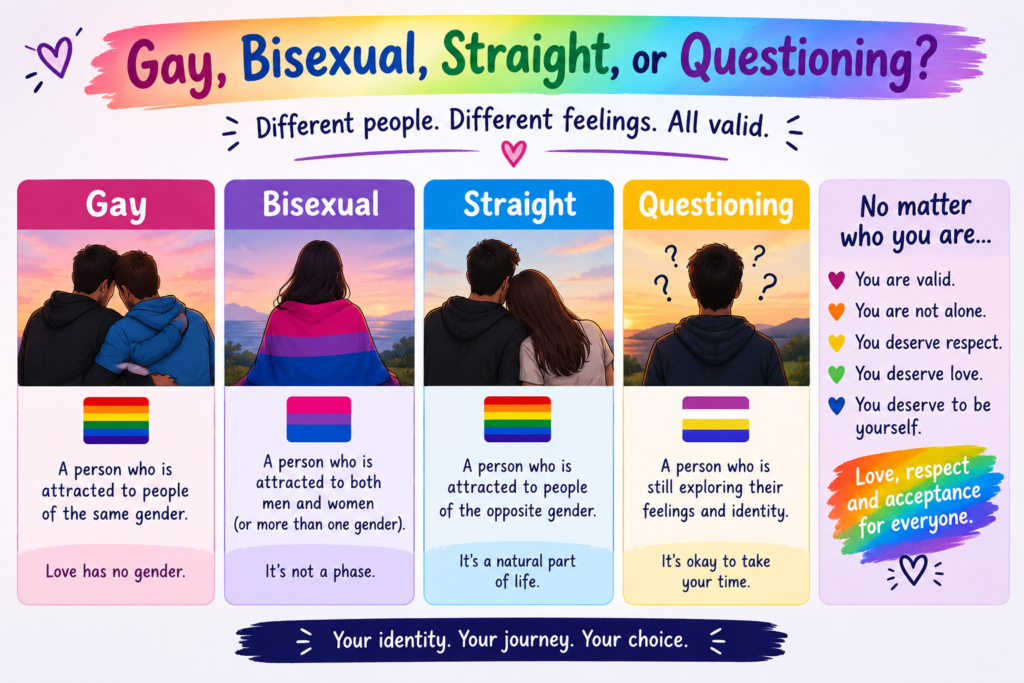
People use different labels to describe their sexual orientation. Gay commonly describes same-gender attraction, while bisexual generally refers to attraction to more than one gender. Straight commonly describes attraction to a different gender. Questioning describes someone who is exploring or uncertain about their orientation. You can use a label, change it later, or choose not to use one at all.
8. 🔍 Is It Normal to Question Your Sexuality?
Yes, questioning your sexuality can be a normal part of self-discovery. People may reflect on their identity at different ages and stages of life. Some understand their attractions early, while others need more time. There is no deadline for figuring things out. Uncertainty does not mean something is wrong with you, and you deserve patience and respect throughout the process.
9. 💬 How to Talk About Your Feelings
If you want to discuss your feelings, consider speaking with someone who listens without judgment. You might start by explaining that you are exploring your identity and would appreciate understanding rather than advice. You do not have to share every detail or choose a label during the conversation. Your privacy matters, and you can decide what to disclose and when.
10. 🛡️ Privacy, Safety, and Coming Out
Coming out means sharing your sexual orientation or identity with others. It is a personal choice, not an obligation. Before sharing, consider whether the people involved are trustworthy and whether the environment is safe. If disclosure could put your emotional, financial, or physical safety at risk, it is okay to wait. You deserve to make this decision on your own terms.
11. 🌟 LGBTQ+ Acceptance and Self-Confidence
Learning about the LGBTQ+ community can help you understand different identities and experiences. Acceptance begins with treating yourself and others with dignity. You do not need to prove your orientation to anyone, and stereotypes do not define who you are. Building self-confidence can involve finding respectful communities, learning from reliable resources, and surrounding yourself with people who value you.
12. 📚 More Quizzes and Self-Discovery Resources
Other quizzes about personality, relationships, and communication may help you reflect on your preferences and emotions. When exploring identity-related resources, look for content that avoids stereotypes and respects different orientations. Remember that entertainment quizzes are not scientific assessments. Reliable educational resources and supportive conversations can provide a more balanced understanding of sexuality, gender identity, and relationships.
13. 📩 The Official wikiHow Quiz Newsletter
Readers who enjoy online quizzes and practical guides may also explore the educational content offered by wikiHow. Check the official wikiHow website for current quiz collections, newsletters, and subscription options. Availability may change, so use the official site for the latest information. Always review privacy information before subscribing to a newsletter or sharing personal details online.
14. 📖 ABCs of Sexual Orientation and Gender Identity
Sexual orientation describes patterns of romantic or sexual attraction. Gender identity refers to a person’s internal understanding of their gender, which may or may not correspond to the sex they were assigned at birth. These concepts are related to personal identity but are not the same. Learning the terminology can encourage respectful conversations and reduce misunderstandings about LGBTQ+ people.
15. 💖 Final Thoughts: Your Identity, Your Journey
If you keep asking “Am I gay?”, remember that you do not need to find an immediate answer. Pay attention to your feelings, learn from trustworthy resources, and give yourself room to grow. An online quiz cannot decide your identity, and other people cannot make that decision for you. Whether you identify as gay, bisexual, straight, questioning, or something else, you deserve respect, safety, and acceptance. 🌈
🔑 SEO Keywords
Primary keywords: Am I gay, Am I gay quiz, sexual orientation quiz, questioning my sexuality.
Secondary keywords: signs you might be gay, understanding sexual orientation, LGBTQ+ identity, gay or bisexual, sexuality self-discovery, gender identity, coming out, LGBTQ+ acceptance.
Meta Description: Wondering “Am I gay?” Explore sexual orientation, common questions, LGBTQ+ identities, self-discovery, and online quiz limitations in this supportive guide.
Suggested URL Slug: am-i-gay
💖 Conclusion: Your Sexuality, Your Journey
Understanding “Am I gay?” is a personal journey that takes time, patience, and self-reflection. 🌈
- Everyone experiences attraction, emotions, and relationships differently.
- You do not need to rush to understand your sexual orientation.
- An Am I Gay quiz can help you reflect, but it cannot determine your identity.
- Being gay, bisexual, straight, or questioning is a personal experience.
- Your feelings may become clearer as you learn more about yourself.
- Never feel pressured to choose a label just to satisfy other people.
- Self-acceptance and emotional well-being are important at every stage.
- Surround yourself with supportive people who respect your privacy.
- Remember that your identity is valid, even if you are still exploring it.
- Most importantly, be kind to yourself and move at your own pace. ❤️
Your journey is yours alone, and you deserve to feel safe, respected, and accepted just as you are.
❓ Frequently Asked Questions (FAQs)
1. 🌈 What does “Am I gay?” mean?
It means you are exploring whether your romantic or sexual attractions align with being gay. Asking this question does not automatically determine your sexual orientation.
2. 📝 Is the Am I Gay quiz accurate?
Online quizzes are designed for reflection or entertainment. They cannot scientifically determine your sexual orientation or tell you which identity label to use.
3. ❤️ What are some signs I might be gay?
You might experience romantic or sexual attraction toward people of the same gender. However, there is no single sign or checklist that definitively determines your identity.
4. 🧠 Is questioning my sexuality normal?
Yes, questioning your sexuality can be a normal part of self-discovery. Everyone has their own timeline for understanding their feelings and identity.
5. 💕 Can I be gay without having a relationship?
Yes. You do not need relationship experience to recognize or explore your attractions.
6. 🏳️🌈 What is the difference between being gay and bisexual?
Gay generally describes same-gender attraction, while bisexual generally describes attraction to more than one gender. Individual experiences can vary.
7. 🔍 Do I need to label my sexual orientation?
No. You can choose a label that feels right, remain questioning, or decide not to use a label at all.
8. 🤝 Who can I talk to about my sexuality?
You may speak with a trusted friend, supportive adult, or qualified counselor who respects your privacy and identity. Choose someone with whom you feel safe.
9. 🛡️ Do I have to come out to my family and friends?
No. Coming out is a personal choice. Consider your safety, privacy, and circumstances before deciding whether to share your identity.
10. 💖 How can I feel more confident about my identity?
Give yourself time, learn from reliable LGBTQ+ resources, and avoid comparing your experiences with others. Self-acceptance begins with treating yourself with kindness and respect. 🌟
